Acknowledgement of Country//
Headlines
Scott Drummond, Head of Policy and Practice at the Victorian Alcohol and Drug Association (VAADA), joined us to talk about International Overdose Awareness Day on Monday the 31st of August. This year was marked by record numbers of heroin related overdoses in Victoria, with Geelong sadly taking the lead. Scott discussed urgent calls from Geelong to address their overdose crisis, as well as VAADA' key state-wide election asks.//
Adu Hani, Secretary of the Renters and Housing Union, joined us to discuss RAHU's recent success with collective tenant bargaining and its implications for future tenant organising in Victoria. Adu also spoke about upcoming rental reforms coming into effect on 13 October, and key commitments tenants should be mindful of when it comes to the November state elections.//
Bebe Oliver, Bardi Jawi poet, author, illustrator and Artistic Director and CEO of Blak & Bright joins us to talk about the opening of Blak & Bright’s 2026 literary festival. This year's festival theme every:when centres First Nations understandings of time as continuous and relational. Through a series of workshops, panels and performances starting today, Thursday the 3rd of September, and running until this Sunday the 6th, audiences will engage with stories and conversations that challenge linear notions of past, present and future. Blak & Bright is the leading organisation showcasing and elevating First Nations literary voices in so-called Australia.//
Dr Ruchira Talukdar, co-founder and coordinator of Sapna South Asian Climate Solidarity, speaks with us about the importance of situating the recent catastrophic flooding in Nepal and Tibet in the broader context of climate change effects in the Himalayas. Ruchira also speaks about the responsibility of high-emitting, wealthy countries such as Australia to provide climate finance to regions bearing the brunt of climate disaster. Join Sapna’s upcoming webinars about climate change and flooding in the Himalayas, dams in the Himalayas, and green remittances.//
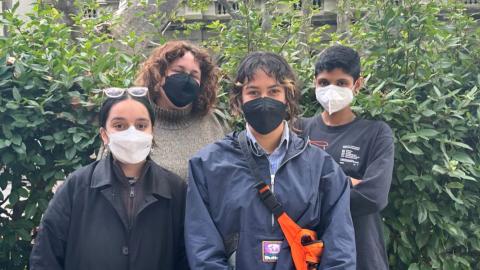
Emily, Inez, Leila, Priya, Kate