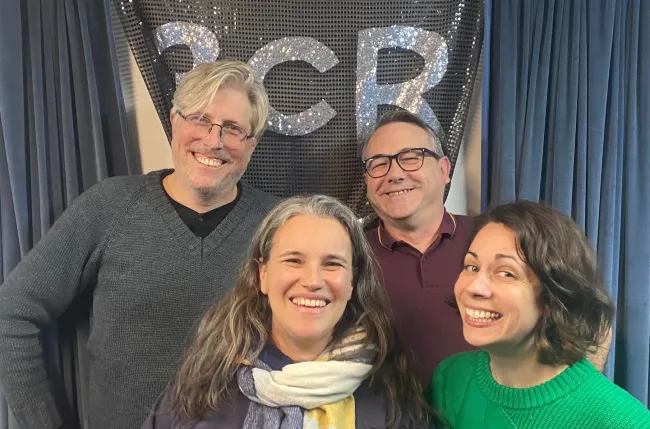
Join Lost in Science for your weekly half hour dose of science with Claire, Stu, Linden and Chris as they discuss new research, interview guests and talk frankly about science; from the everyday to how science has the potential to impact our world.
And if you like what you hear, you can find us on Facebook, on X, or get in touch with us at lostinsci [at] gmail [dot] com (lostinsci[at]gmail[dot]com)
This program is also broadcast to stations around Australia through the Community Radio Network, the satellite service of the Community Broadcasting Association of Australia. Financially supported by the Community Broadcasting Foundation.


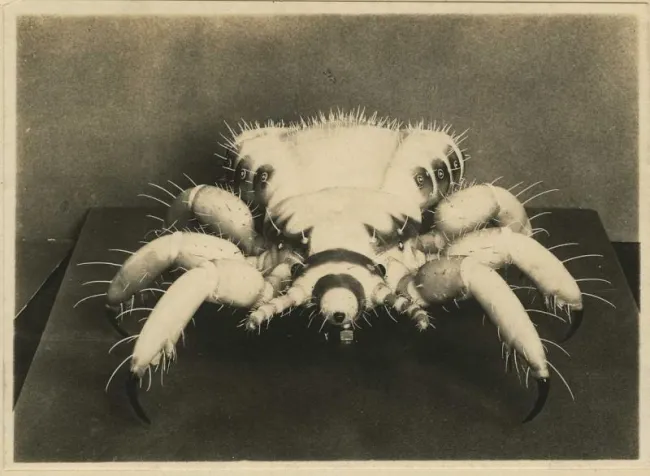
Feeling itchy? You will be soon as you listen to our tale of body lice, Pediculus humanus corporis. These blood-sucking insects are believed to have diverged from head lice, Pediculus humanus capitis, when humans started wearing clothes—which evidence suggests could have been as long as 170,000 years ago.
We also talk to astrophysicist Cleo Loi, who discovered giant plasma tubes in the Earth's magnetosphere while an undergraduate at the University of Sydney. You can see her talk about these cylinders of ionised gas in the video below:
But this also wasn't Cleo's first discovery—she previously helped identify a supernova remnant in our own galaxy, which exploded about 2500 years ago.
Finally, combining scratching and history, we find out about the evolution of Yersinia pestis, the bacterium that caused pneumonic and bubonic plague, aka the Black Death, and probably also the Justinian plague from 800 years earlier.
And for a musical tribute to Yersinia pestis here's a cover of Gwen Stefani's Hollaback Girl, by the Historyteachers: