“Think Again…”
A Program developed and offered by the Borderlands Cooperative.
Weekly on Fridays 10-10.30am
Think Again offers weekly conversations and reflections about current events, trends and public pronouncements about contemporary and emerging issues, trying to move beyond what we read and hear via the public and ‘social’ media. Think Again invites to explore alternative ways of understanding these issues and looks at different possibilities to guide or thinking, living and organising ourselves.
Think Again conversations will expose inequities and injustices as they are, trying to go into some depth about them and look at the implications for our daily lives. So whilst a core focus is on economic, social and ecological issues and their intersections, we will also invite guests to share new ways of working toward a more cooperative, mutually-fulfilling, restorative and regenerative future.
After 21 years of working in the overlapping areas of ecologically informed community development, international solidarity and peace, inter-cultural learning and respectful relating and participatory action research and evaluation, Borderlands is trying to reach out to the community via the medium of social change radio to amplify our efforts towards approaches that develop communities and cooperative ways of living, working, creating and producing.
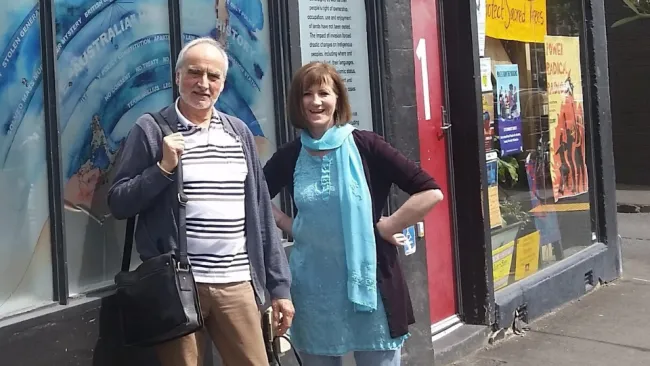
Jennifer Borrell and Jacques Boulet are the moderators and presenters of the Think Again program with invited guests and occasional guest presenters.
Jennifer interviews David Hayward, emeritus professor of public policy at RMIT University, about the need to invest in caring work, the support sector and the common good.
David describes the failure of privatisation in areas such as aged care and childcare, with many private companies using government revenue for property development rather than good quality support!
In addition, investment of public money in the private profit model has led to under-investment in caring and support work, and precarious, casualised and underpaid work.
This work is mainly done by women. David finishes the interview with some ideas about what we need to do to remedy this situation