Exploring Extreme Heat: Part One
Hot histories - can heatwaves of the past teach us how to adapt to extreme heat?
Earth Matters is embarking on a multi-episode series exploring what intense heat events mean for Australians.
We’ll be hearing from settler Australians, migrant communities and First Nations people living in different parts of so-called Australia to understand how heat affects us, and whether current adaptation practices are sufficient to equip us for a hotter future.
In Part One we delve into the near past to discover how Australians of European background lived through heatwaves in the 19th and 20thcenturies, and what their experiences mean for Australians today.
We hear from settler Australian environmental historians Rochelle Schoff and Mandy Paul who spoke at a History Council of Victoria Making Publc Histories event last year.
The event was convened by Margaret Anderson, manager of the Old Treasury Building in Naarm/Melbourne.
Rochelle Schoff is a La Trobe University PhD Candidate and member of the Parched research project team.
Mandy Paul is a public historian researching the history of heatwaves in Tarntanya/Adelaide and Head of Collections at the History Trust of South Australia.
Historian Rebecca Jones was the third speaker at this event. Her research will be shared in a later episode.
Thanks to the History Council of Victoria for providing access to the recording of Making Public Histories—Thinking about the weather: Heatwaves and history in twentieth century Australia event held on 27 November 2025. You can watch the full event here.
Note: Statements made by Anangu community members shared by Rochelle Schoff were sourced from the following research paper, Bardsley, D. K., & Wiseman, N. D. (2016). Socio-ecological lessons for the Anthropocene: Learning from the remote Indigenous communities of Central Australia. Anthropocene, 14, 58–70. https://doi.org/10.1016/j.ancene.2016.04.001
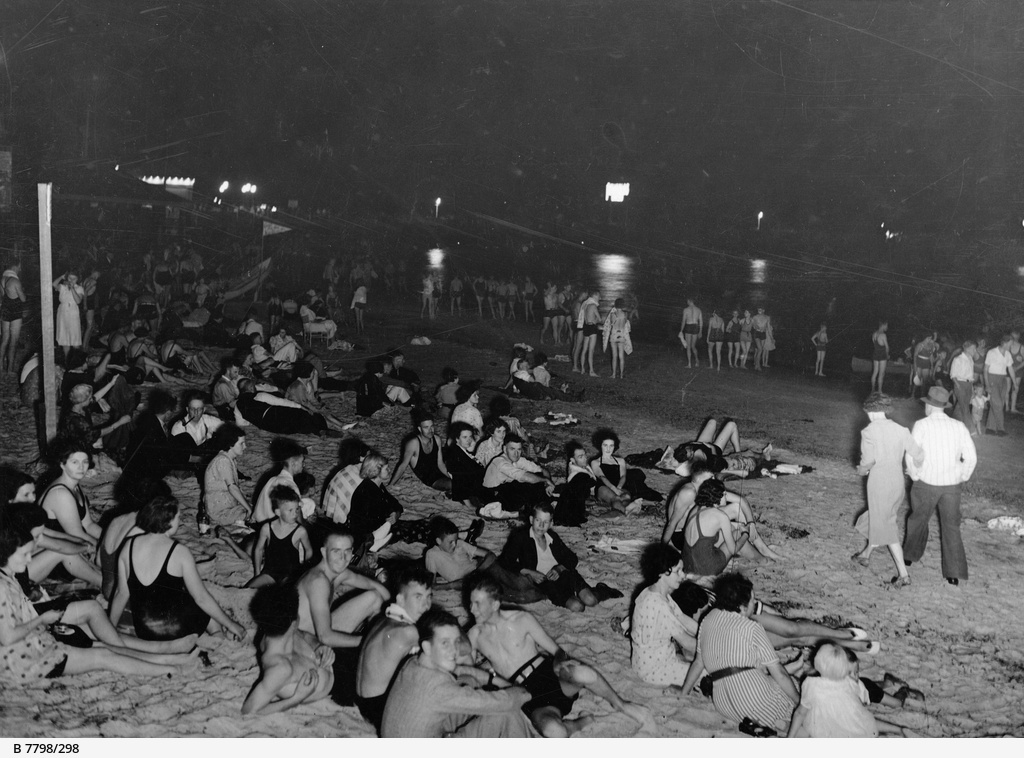
Image Credit: State Library of South Australia, B 7798/298.

Bec Horridge, Claudia Craig, Mia Audrey & Keiran Stewart-Assheton.