
Join Lost in Science for your weekly half hour dose of science with Claire, Stu, Linden and Chris as they discuss new research, interview guests and talk frankly about science; from the everyday to how science has the potential to impact our world.
And if you like what you hear, you can find us on Facebook, on X, or get in touch with us at lostinsci [at] gmail [dot] com (lostinsci[at]gmail[dot]com)
This program is also broadcast to stations around Australia through the Community Radio Network, the satellite service of the Community Broadcasting Association of Australia. Financially supported by the Community Broadcasting Foundation.

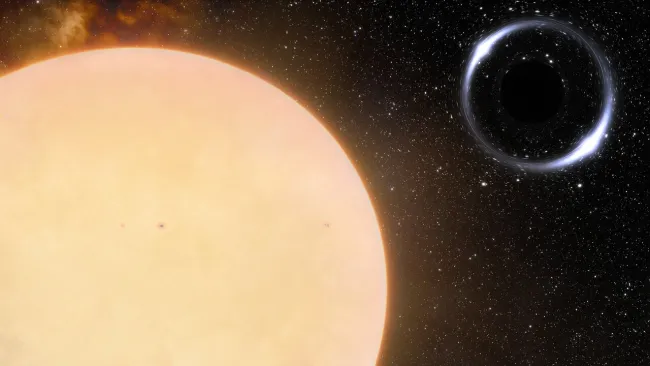
This week, Cat tells us about nanobodies, the smaller versions of antibodies that camelids like llamas and alpacas have, and how they could help combat HIV; and Chris clues us into the closest known black hole in our galaxy, and a much larger one thousands of times the mass of our Sun, hidden inside a star cluster.
Jianliang Xu et al., Ultrapotent Broadly Neutralizing Human-llama Bispecific Antibodies against HIV-1. Adv. Sci. 2024, 11, 2309268. https://doi.org/10.1002/advs.202309268
Kareem El-Badry et al., A Sun-like star orbiting a black hole, Monthly Notices of the Royal Astronomical Society, Volume 518, Issue 1, January 2023, Pages 1057–1085, https://doi.org/10.1093/mnras/stac3140
Häberle, M., Neumayer, N., Seth, A. et al. Fast-moving stars around an intermediate-mass black hole in ω Centauri. Nature 631, 285–288 (2024). https://doi.org/10.1038/s41586-024-07511-z