
Join Lost in Science for your weekly half hour dose of science with Claire, Stu, Linden and Chris as they discuss new research, interview guests and talk frankly about science; from the everyday to how science has the potential to impact our world.
And if you like what you hear, you can find us on Facebook, on X, or get in touch with us at lostinsci [at] gmail [dot] com (lostinsci[at]gmail[dot]com)
This program is also broadcast to stations around Australia through the Community Radio Network, the satellite service of the Community Broadcasting Association of Australia. Financially supported by the Community Broadcasting Foundation.


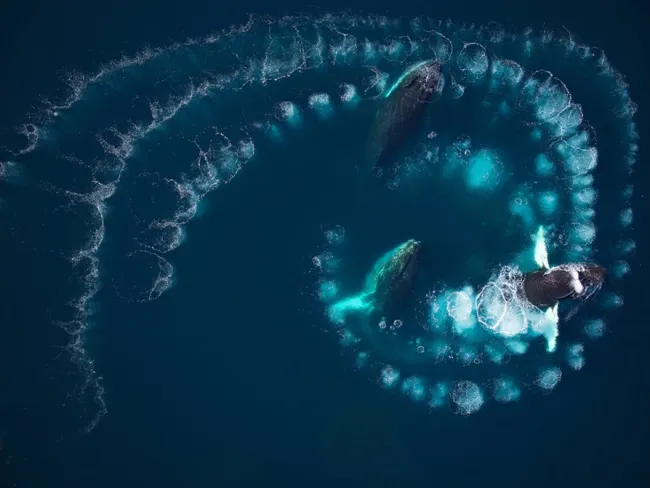
This week, Stu tells us about new research making animals invisible, or rather their tissue transparent, using a common food dye; and Cat tells us about how humpback whales make and use nets of bubbles as tools for hunting, and recently discovered secrets of their mating and birth.
Zihao Ou et al. Achieving optical transparency in live animals with absorbing molecules. Science 385, eadm6869(2024). DOI:10.1126/science.adm6869
Andrew Szabo et al. 2024. Solitary humpback whales manufacture bubble-nets as tools to increase prey intake. R. Soc. Open Sci.11240328
http://doi.org/10.1098/rsos.240328
Stephanie Stack et al. 2024. An observation of sexual behavior between two male humpback whales. Marine Mammal Science https://doi.org/10.1111/mms.13119
Watch a video of the humpback whale heat run and birth: https://www.youtube.com/watch?v=BQPAgFH96mQ