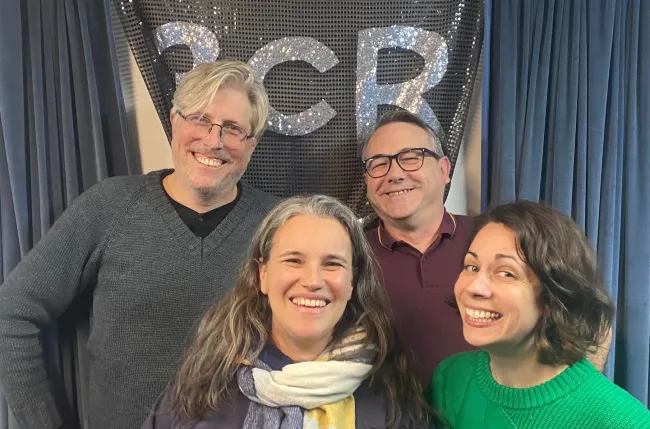
Join Lost in Science for your weekly half hour dose of science with Claire, Stu, Linden and Chris as they discuss new research, interview guests and talk frankly about science; from the everyday to how science has the potential to impact our world.
And if you like what you hear, you can find us on Facebook, on X, or get in touch with us at lostinsci [at] gmail [dot] com (lostinsci[at]gmail[dot]com)
This program is also broadcast to stations around Australia through the Community Radio Network, the satellite service of the Community Broadcasting Association of Australia. Financially supported by the Community Broadcasting Foundation.
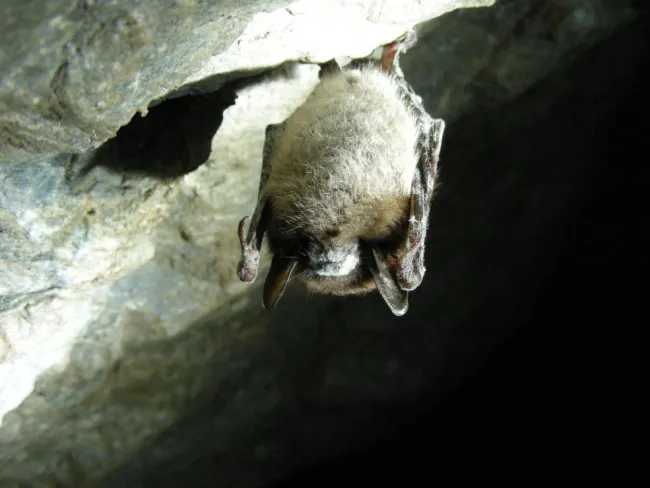
Guest presenter and bat expert Manisha Bhardwaj tells us about a bacteria that helps fight white-nose syndrome, a fungal disease that's killing American bats, and how it's now being tested in the wild.
Bacteria also contribute to medicine by producing drugs, e.g. genetically modified Escherichia coli is used to manufacture insulin for treating diabetes.
Now American and Canadian scientists have found a way to use yeast to synthesise a precursor to opiates—which include drugs like heroin, morphine and codeine—so that they can be made in the laboratory instead of from opium poppies.
If that wasn't enough to turn you around, think about which is more real: centrifugal force, which throws you outward when you're turning in a circle, or centripetal force, the inward-pointing force that keeps you rotating?
Turns out it's all relative... As is the Coriolis effect, which causes cyclones to rotate differently in the northern and southern hemispheres—which you can see demonstrated at www.smartereveryday.com/toiletswirl.