We ask exactly whose voices are being heard in the cacophony of commentators, pundits, scholars, practitioners, activists and educators and explore what ‘new media’ means in creating or holding back social and political change.
Communication Mixdown emphasizes inclusiveness and diversity, giving space to progressive opinion and analysis that can get side-lined, swamped or entirely ignored by mainstream media reportage and commentary. We tackle the ‘big picture’ issues, investigating how communication could be more inclusive and diverse across a whole range of communication/media industries.
Communication Mixdown values alternative voices, and we look at how social media is connecting a vast range of ordinary people, cutting across the social parameters of class, gender, race, ethnicity, age, and nation. This process of ‘democratization’ of communication and media is a central feature of the show.
A very auspicious time for Indigenous communities all around Australia - National Sorry Day on May 26, followed by National Reconciliation Week, and ending with Mabo Day on June 3, the commemoration of Eddie Mabo and the campaign leading to the 1992 landmark decision of the High Court overturning the legal fiction of terra nullius. Making sense of any idea of commemoration, or indeed, any idea of community leads inevitably to the tangible and intangible domain of language – how it’s used, how it embodies special cultural knowledge, and how it survives.
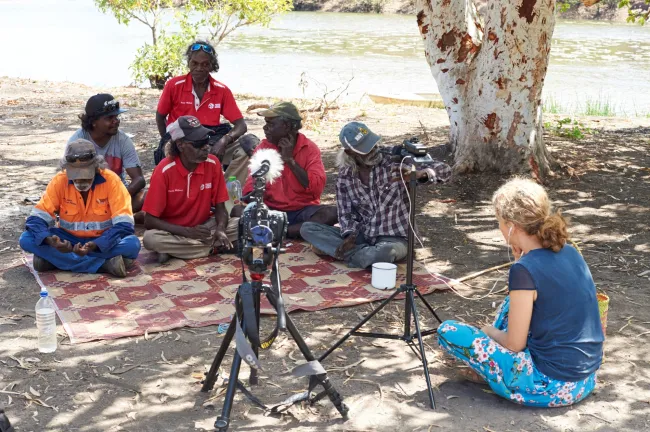
Project officer with First Languages Australia, Annalee Pope, outlines her involvement with the Priority Languages Documentation initiative, and explains some of the ways that renewed interest in Indigenous languages is taking shape all across the country. And, Indigenous writer and researcher Bruce Pascoe talks about first languages in we now know as the state of Victoria, and explains the intersections of Indigenous language, forms of governance and sustainability.