
We ask exactly whose voices are being heard in the cacophony of commentators, pundits, scholars, practitioners, activists and educators and explore what ‘new media’ means in creating or holding back social and political change.
Communication Mixdown emphasizes inclusiveness and diversity, giving space to progressive opinion and analysis that can get side-lined, swamped or entirely ignored by mainstream media reportage and commentary. We tackle the ‘big picture’ issues, investigating how communication could be more inclusive and diverse across a whole range of communication/media industries.
Communication Mixdown values alternative voices, and we look at how social media is connecting a vast range of ordinary people, cutting across the social parameters of class, gender, race, ethnicity, age, and nation. This process of ‘democratization’ of communication and media is a central feature of the show.
Origins and principles of Shariah law: Which version the Taliban is likely to implement?
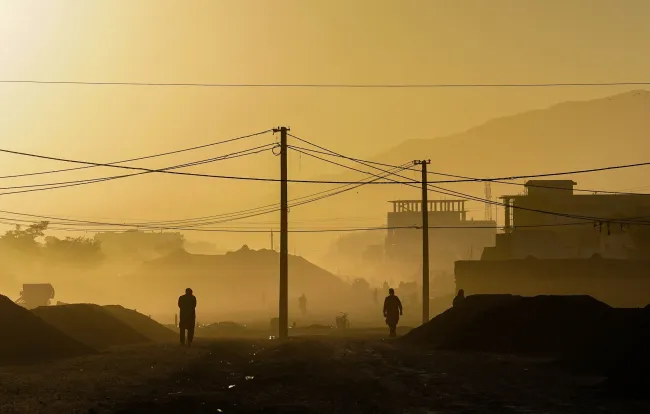
As the Taliban consolidates its rule in Afghanistan it is endeavouring to present a more moderate face to the world. However the statement from the Taliban that it would not discriminate against women and would give them their rights “within the bounds of shariah”, means little if they don't define which version of Shariah law they plan to implement.
An article by Associate Professors Zuleyha Keskin and Mehmet Osalp entitled Explainer: What is Shariah law and what version of it is the Taliban likely to implement was published in the Conversation on August 25th, 2021. It looks at the history and principles of Shariah Law, how it declined after the golden age of Islam and with the colonisation of Islamic countries, and how more recently it's been co-opted and misrepresented by ultra-conservative groups.
Associate Professor Zuleyha Keskin, from the Centre for Islamic Studies and Civilisation at Charles Sturt Unversty, joins Communication Mixdown to discuss the article and what might eventuate in Afghanistan under Taliban rule. We also find out about about Zuleyha's new book Attaining Inner Peace in Islam: Said Nursi's Perspective published just this week, and finish with a brief discussion of the Sufi poet Jalal al-Din Rumi, who was born in Balkh, present-day Afghanistan.