We ask exactly whose voices are being heard in the cacophony of commentators, pundits, scholars, practitioners, activists and educators and explore what ‘new media’ means in creating or holding back social and political change.
Communication Mixdown emphasizes inclusiveness and diversity, giving space to progressive opinion and analysis that can get side-lined, swamped or entirely ignored by mainstream media reportage and commentary. We tackle the ‘big picture’ issues, investigating how communication could be more inclusive and diverse across a whole range of communication/media industries.
Communication Mixdown values alternative voices, and we look at how social media is connecting a vast range of ordinary people, cutting across the social parameters of class, gender, race, ethnicity, age, and nation. This process of ‘democratization’ of communication and media is a central feature of the show.
Image: Tim Waters/Flickr
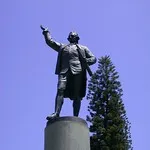
Colonial monuments have been in the spotlight since the Rhodes Must Fall movement started in South Africa in March 2015, and have faced renewed focus in 2020 because of the Black Lives Matter protests. Starting with the removal of slaver Edward Colston's statue in Bristol, a number of statues have been pulled down around the world -- but not in Australia.
Reema Rattan facilitates a discussion between ANU Professor of History Bruce Scates and Shanti Sumartojo, Associate Professor of Design Research at Monash University, about what monuments and memorials communicate to try to uncover their role in the public and historical imagination.