Radio
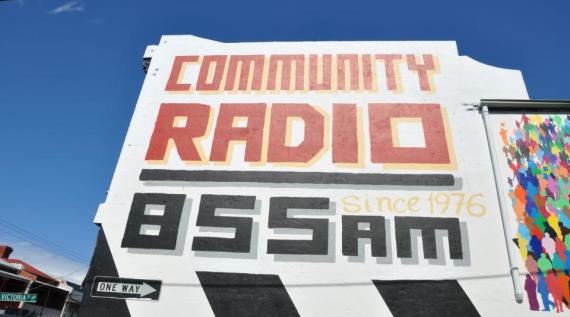
- 855 AM Melbourne
Saturday at 10 am and repeated the following Tuesday at 6.30 am.
In English.
An anti-nuclear program with up-to-date news and information on nuclear, peace and energy issues.
It features interviews, news updates and on-the-spot action reports, with music breaks and insights from the presenters. The producers of the show are committed anti-nuclear activists with wide national and international experience. The Radioactive Show has been broadcast on Community Radio 3CR at the Saturday morning time slot for over 20 years.
This program is also broadcast to stations around Australia through the Community Radio Network, the satellite service of the Community Broadcasting Association of Australia, on Thursday evening at 18:04.
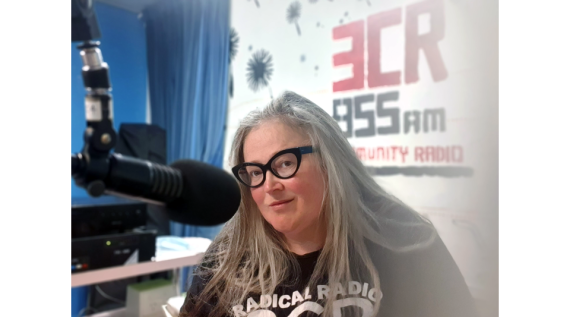
Presented by Neylan Aykut, Jimmy Cocking, Madeline Hudson and Mia Pepper.
Contact ras3cr@hotmail.com
Subscribe to the weekly podcast of the Radioactive Show.
3CR’s Radioactive Show, community radio’s weekly look at nuclear, peace and energy issues, turns 30 this year. The Movement Against Uranium Mining (MAUM) established the program at 3CR as Australia’s anti-nuclear movement was beginning to blossom.
The program’s early producers included Roger Cook, Ian Wood and Larry Marshall. As regular listeners would be aware, Ila Marks and Eric Miller have produced the show for almost 20 years, more recently with the help of presenters Linda Marks, Cherie Eaton and Paul Calvert.
Eric and Ila had been regular contributors to the program since 1983 when they were both involved with the blockades at the Roxby uranium mine in South Australia. The duo’s first program covered indigenous protests at the 1988 Invasion Day rally in Sydney. Eric and Ila have been strong supporters of indigenous and environmental rights through their many visits to Australian nuclear hotspots and the Radioactive Show has played a key role in the ongoing campaign to stop nuclear developments in Australia.
Regular contributors have been activists from all over Australia, as well as from organisations such as Friends of the Earth, Australian Conservation Foundation, Medical Association for the Prevention of War and People Against A Nuclear Reactor.
At the beginning of 2006 Eric and Ila decided to take a well-earned rest from radio and I spoke to them in South Australia, not long after they began their Australia-wide holiday. Eric explained, “The Radioactive Show was vital for MAUM’s early campaigns as an information source about demonstrations and actions. For example, when nuclear warships and submarines came into the Port of Melbourne, the 20 MAUM groups around Melbourne would mobilise to get people onto the water to stage large and colourful protests.”
“I took over the show in 1988 when the show had a large audience that wanted updates on land rights around uranium mining issues. The ALP’s 3 mines policy [which limited the number of uranium mines in Australia to 3 – Ranger and Narbalek in the Northern Territory and Roxby in South Australia] was under threat and this was an important focus for both the program and the wider anti-nuclear and peace movement.
“Everything changed when the Howard Government came into power in 1996 and said that it was open slather on uranium mining – even in Kakadu National Park. Despite this, over the past decade the anti-nuclear movement has successfully held the industry at bay with only the Beverley uranium mine in South Australia’s north-east opening in 2000. The Radioactive Show has been pivotal to this success, by keeping activists around Australia connected, updated and informed.
“1999 was another vital milestone for the Radioactive Show - we began broadcasting nationally on ComRadSat [the satellite service of the Community Broadcasting Association of Australia]. The program is now heard on 23 community radio stations around the country including in Canberra, Byron Bay and Orange!”
Ila Marks adds, “The Radioactive Show has always given a voice to activists campaigning on the ground – those living near uranium mines, a nuclear reactor or a food irradiation plant. The program has also regularly kept in touch with the people developing anti-nuclear policy and campaign strategy.”
The program’s new producers in 2006 are Emily Johnston and Bilbo Taylor. Bilbo has been involved in anti-nuclear, indigenous and environmental activism for more than 10 years.
According to Bilbo, “One of the most amazing things I have experienced was spending four years living and working with the Arabunna nation [traditional owners of the Lake Eyre region of north-east South Australia] to stop the devastation of the Olympic Dam uranium mine.
“More recently I have been on two anti-nuclear and peace walks. The first was the 'International Peace Pilgrimage' in 2004, a nine-month 4700km walk from Australia’s Olympic Dam uranium mine to Hiroshima in Japan. In 2005 I walked with the 'Stop The Bombs Peace Walk' in the US - from the Y12 nuclear weapons facility in Tennessee to the United Nations Headquarters in New York. I’m really looking forward to keeping in contact with many of the activists I met during these amazing experiences.”
Emily also had the walking bug, taking part in the Lake Eyre to Sydney Peace Walk with Arabunna elder Uncle Kevin Buzzacott in 2000. “From 2000-2003 I lived in Coober Pedy [South Australia] where I worked on the campaign to stop the nuclear waste dump. That campaign - Irati Wanti, The Poison - Leave It – was initiated and inspired by the Kupa Piti Kungka Tjuta - senior Aboriginal women from the Coober Pedy region.
“I’m proud to say that campaign was successful thanks to the hard work of those women and many other community activists around Australia. Now the focus has shifted to the Northern Territory where the Federal Government plans to force traditional owners to accept the nuclear dump – and a national campaign is once again gearing up to fight this plan. That’s something we’ll continue to cover on the Radioactive Show in 2006”.
3CR would like to take this opportunity to thank Eric and Ila for their dedication and passion over the past 18 years of the Radioactive Show.
By Sarojini Krishnapillai